Aadhaar, India’s unique identification system, has become the backbone of the country’s digital infrastructure. With over 1.3 billion enrolled users, it simplifies identity verification, enabling millions to access services securely and efficiently.
Whether opening bank accounts, obtaining SIM cards, or availing government welfare schemes, Aadhaar’s ecosystem powers seamless service delivery across sectors.

AUA: What is an Authentication User Agency?CIDR: What is CIDR?
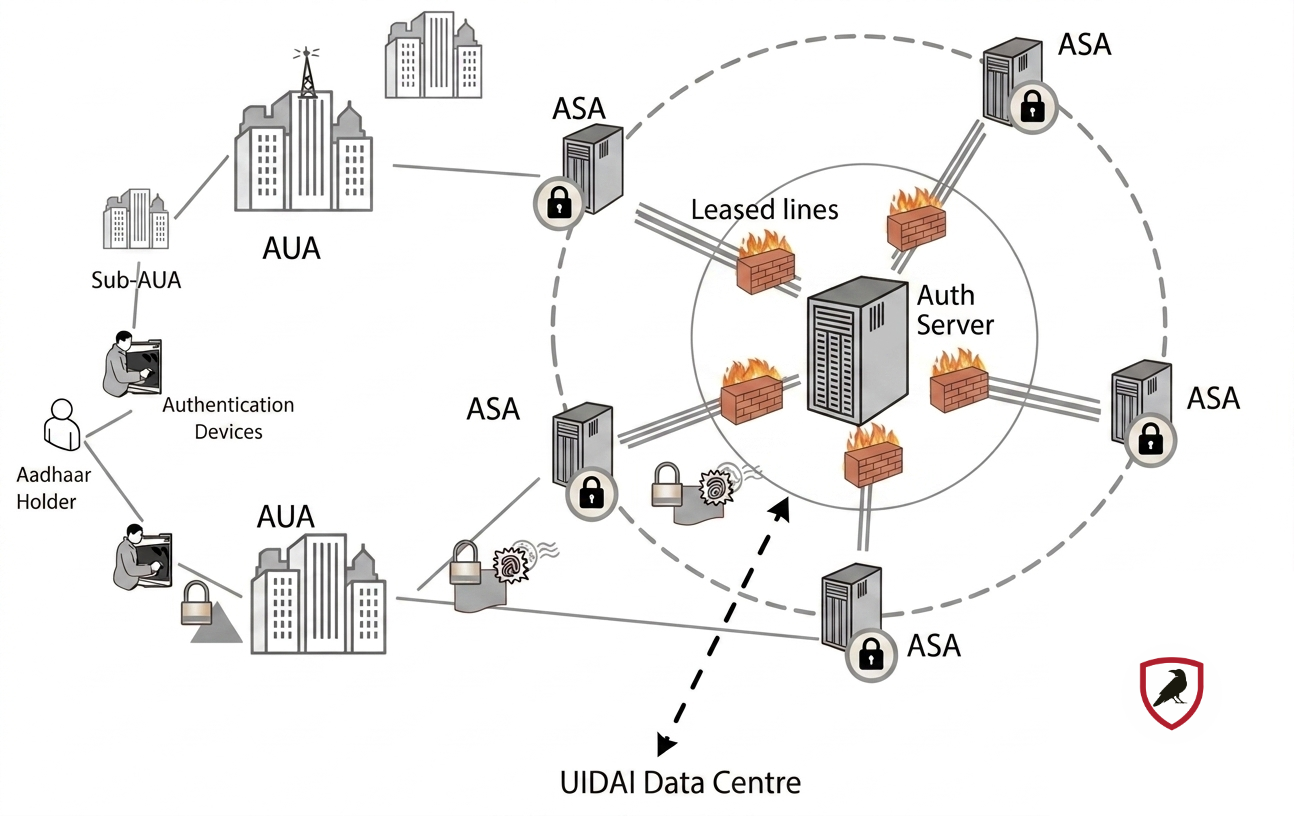
An Authentication User Agency (AUA) is an organization authorized by the Unique Identification Authority of India (UIDAI) to perform Aadhaar authentication to verify user identities. AUAs play a pivotal role in service delivery, ensuring accurate identity verification while safeguarding sensitive information.
Key Responsibilities of CIDR
- Authentication Requests: Initiating Aadhaar authentication requests to UIDAI.
- User Data Collection: Collecting details such as Aadhaar numbers, OTPs, or biometrics.
- Security Compliance: Adhering to strict data protection and security standards set by UIDAI, including the Aadhaar Act, 2016.
Examples of AUA in Action
- Banks: Verifying customer identities for account opening.
- Telecom Providers: Authenticating users to issue SIM cards.
- Government Schemes: Ensuring beneficiaries are accurately identified for welfare programs.
Sub-AUA: How Does It Work?Examples of AUA in Action
A Sub-AUA operates under the infrastructure and license of a primary AUA. These are typically smaller entities that rely on the parent AUA to send authentication requests to UIDAI.
Key Features of Sub-AUA
- Dependency on AUA: Sub-AUAs must route all requests through the parent AUA.
- Compliance Standards: They adhere to the same security and privacy guidelines as the parent agency.
Examples of Sub-AUA
- Smaller government departments using a state-level AUA’s infrastructure.
- Fintech platforms partnering with larger AUAs for Aadhaar-based verifications.
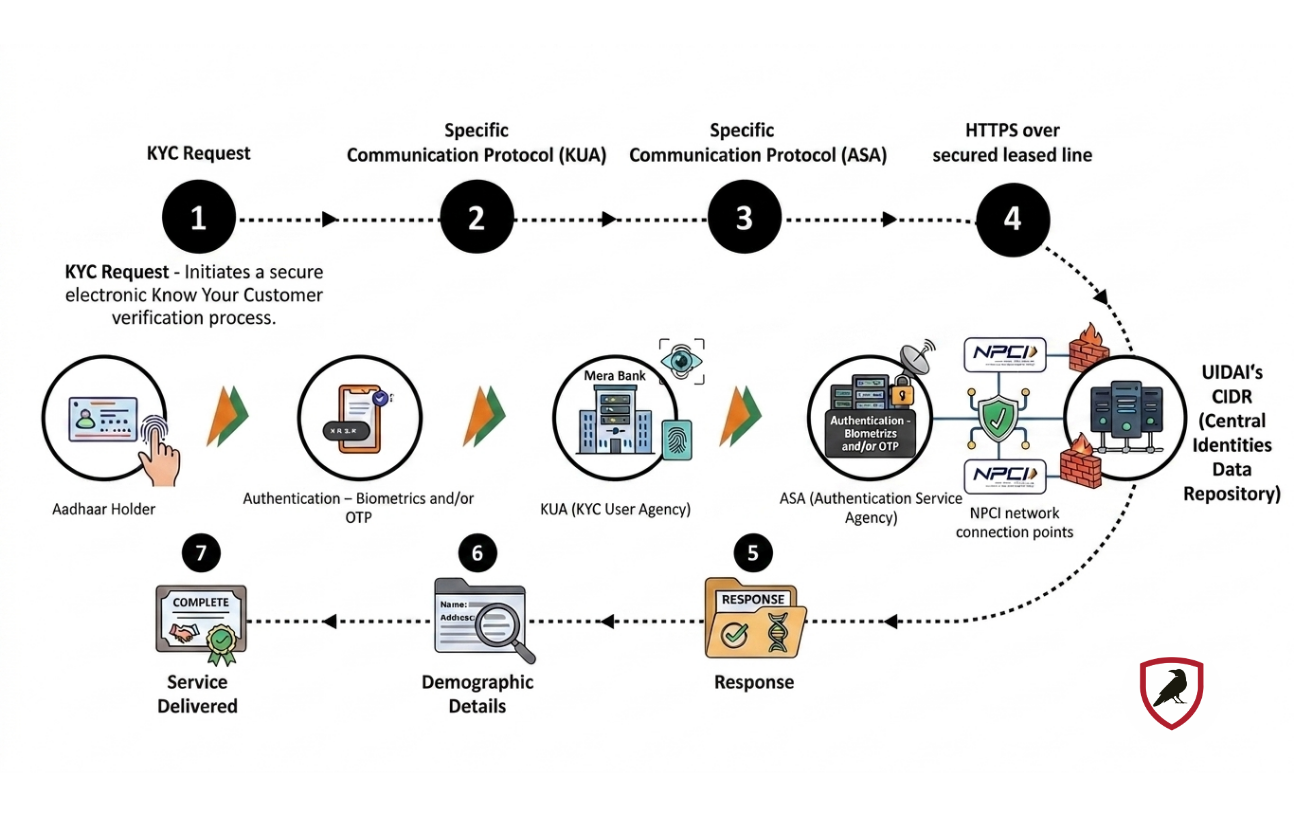
KUA: What is a KYC User Agency? A KYC User Agency (KUA) is a specialised type of AUA that leverages Aadhaar authentication for e-KYC (electronic Know Your Customer) processes. This system eliminates paperwork, enabling seamless onboarding for various services.
Key Responsibilities of KUA
- e-KYC Processing: Conducting Aadhaar-based paperless KYC for customers.
- Consent Management: Ensuring explicit user consent for data usage as per the
- Aadhaar Data Vault Guidelines. Data Security: Handling sensitive customer data securely and reliably.
Benefits of KUA
- Efficiency: Accelerates verification processes by eliminating manual paperwork.
- Accuracy: Direct authentication with UIDAI ensures precise data verification.
- Security: Ensures sensitive data is encrypted and securely transmitted.
Examples of KUA Applications
- Financial Institutions: Conducting e-KYC for loans and credit cards.
- Telecom Companies: Verifying customer identities during new SIM issuance.
Sub-KUA: How It Functions
A Sub-KUA operates under the umbrella of a primary KUA, utilizing its infrastructure and license to perform Aadhaar-based e-KYC. Sub-KUAs are ideal for smaller organizations that cannot directly obtain a KUA license.
Key Features of Sub-KUA
- Parent KUA Dependency: Sub-KUAs route all requests through the parent KUA.
- Security Standards: Sub-KUAs are subject to the same stringent security requirements as the parent KUA.
Examples of Sub-KUA
- Fintech companies using a bank’s KUA license to onboard customers.
- Microfinance organizations leveraging Aadhaar-based e-KYC via their partner KUA.
What is an ASA?
An Authentication Service Agency (ASA) acts as an intermediary between AUAs/KUAs and UIDAI, ensuring secure transmission of authentication requests and responses. ASAs are critical to maintaining the integrity of the Aadhaar ecosystem.
Key Responsibilities of ASA
- Data Transmission: Securely transmitting authentication requests to UIDAI.
- Operational Reliability: Ensuring consistent uptime and availability for authentication services.
Examples of ASA
- National Payments Corporation of India (NPCI).
Security Compliance
ASAs adhere to stringent UIDAI security protocols, including encryption and network monitoring, ensuring user data remains protected, both in-transit and at rest.
What is a KSA?
A KYC Service Agency (KSA) facilitates secure and seamless exchange of e-KYC data between KUAs and UIDAI, ensuring efficient processing of Aadhaar-based identity verification.
Key Responsibilities of KSA
- Supporting KUAs in conducting real-time e-KYC.
- Ensuring secure, encrypted data transfers as per UIDAI’s Encryption Standards.
Importance of KSA
KSAs streamline the e-KYC process, making it faster and safer for organizations to verify their customers.
What is CIDR?
The Central Identities Data Repository (CIDR) is the backbone of the Aadhaar system, storing and managing all Aadhaar-related demographic and biometric data.
Key Responsibilities of CIDR
- Data Verification: Authenticating Aadhaar credentials during service requests.
- Data Security: Ensuring encryption and restricted access to sensitive information.
- Security Features of CIDR Encryption: Multi-layered encryption protects user data.
- Access Control: Only authorised entities can access CIDR under strict guidelines outlined in the Aadhaar Act.
Importance of CIDR
CIDR is the central hub that ensures accurate, secure, and efficient identity verification, supporting billions of transactions every day.
How the Aadhaar Ecosystem Works Together
- User Interaction: Users provide Aadhaar details and consent for authentication.
- Request Generation: AUAs/KUAs collect data and forward it to the ASA.
- Secure Routing: ASA securely transmits requests to the CIDR.
- Verification: CIDR authenticates the user’s data and returns the result.
- Service Delivery: AUAs/KUAs utilize the verified data for service delivery.
- Sub-AUA/Sub-KUA Integration: Smaller entities leverage their parent AUA/KUA infrastructure for seamless operations.
The Aadhaar ecosystem is a meticulously designed network of components—AUA, Sub-AUA, KUA, Sub-KUA, ASA, KSA, and CIDR. Together, they ensure secure and efficient identity verification, enabling Aadhaar to power India’s digital transformation. With its seamless integration and robust security measures, Aadhaar is paving the way for transparent and inclusive access to services across sectors.
References & Additional Resources
UIDAI Official Website
Aadhaar Data Vault Guidelines
National Payments Corporation of India (NPCI)
GDPR Compliance ISO 27001 Standards

.png)